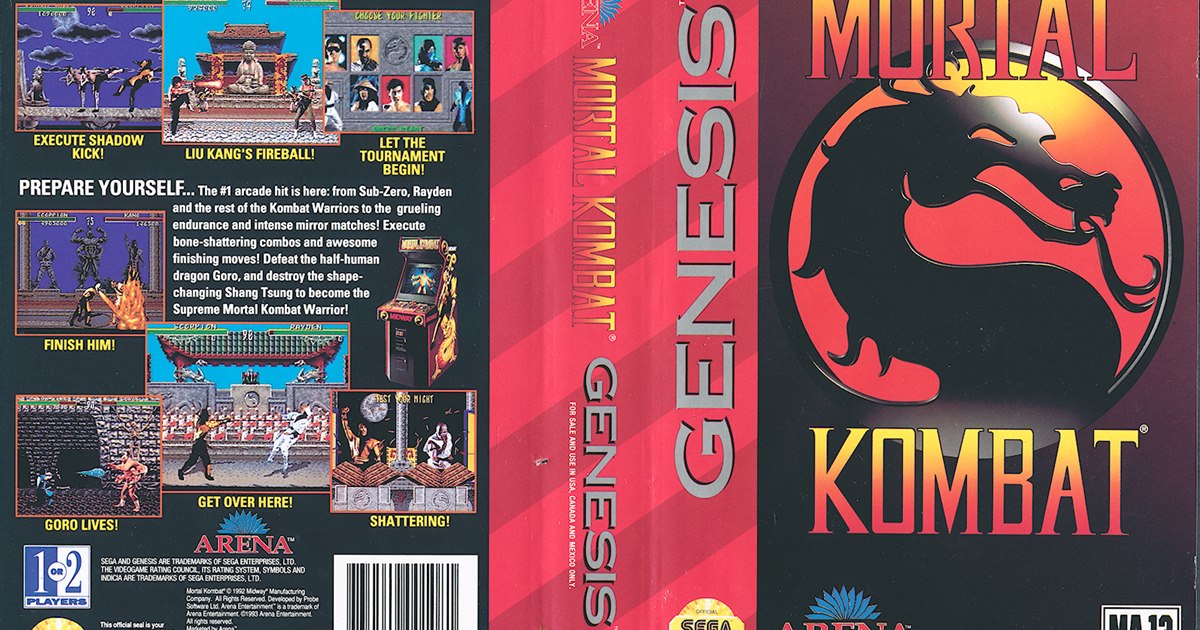
Mortal Kombat: Blood, Controversy, and the Rise of Fighting Games
The full history of Mortal Kombat — from its digitized-sprite origins in 1992 to the Senate hearings that created the ESRB rating system, and why it still holds up as a fighting game today.
Last updated:
Quick Answer
Mortal Kombat (1992) was the game that forced the video game industry to create its own rating system or face federal regulation. It was also a genuinely good fighting game with a distinctive visual style, memorable characters, and one of the best sequels ever made in MK2. The controversy was real — but so was the quality.
Last Updated
Content reviewed May 2026. Historical details about the Senate hearings and ESRB formation were verified against public records. Platform availability confirmed at time of writing.
Who This Is For
- Retro gamers who want the full context behind one of the most controversial games ever made
- Fighting game fans comparing MK1 to Street Fighter II
- Anyone curious about how the ESRB rating system actually came to exist
- Players looking for legal ways to play the original Arcade Kombat today
Key Takeaways
- MK1 launched in arcades in 1992 using digitized photography — a deliberate choice to look more “real” than SF2’s illustrated style
- The SNES port censored the blood; the Genesis version kept it behind a code (ABACABB)
- Genesis MK outsold the SNES version significantly — players voted with their purchases
- U.S. Senate hearings in late 1993 targeted MK directly; the ESRB was established in September 1994
- Mortal Kombat II (1993) is widely considered the mechanical peak of the classic era
Origins: Outrunning Street Fighter II
By 1992, Street Fighter II owned the arcade fighting game market. Midway Games decided not to compete on SF2’s terms. Instead of illustrated characters and martial arts precision, they went photorealistic and brutal.
Ed Boon and John Tobias led the project. The core decision — to use digitized photographs of real actors as sprites — was both a technical and strategic choice. Digitized actors would look different from every other fighting game. They would also look more like action movies, which is exactly what Midway wanted.
The cast was photographed on blue screen and converted to in-game sprites. Daniel Pesina played both Johnny Cage and the masked ninja characters. Ho Sung Pak played Liu Kang and Shang Tsung. The result was a visual style that looked striking on arcade hardware — photorealistic enough to draw a crowd, violent enough to keep them watching.
The mythology was deliberately B-movie: an ancient tournament, a sorcerer, seven fighters, and the fate of the world. It was not trying to be deep. It was trying to be memorable.
The Characters of the Original Roster
| Character | Style | Notable For |
|---|---|---|
| Liu Kang | Balanced/Rushdown | Protagonist; most accessible specials |
| Johnny Cage | Shades/Splits | Crowd-pleaser; groin punch still funny |
| Sonya Blade | Special Forces | First female fighter; leg grab combo |
| Kano | Mercenary | Knife throw; heart rip fatality |
| Raiden | Thunder God | Teleport; electrocution fatality |
| Sub-Zero | Lin Kuei / Ice | Freeze mechanic; spine rip fatality |
| Scorpion | Specter / Hellfire | Spear “Get over here!”; toasty fatality |
| Shang Tsung | Boss (non-playable MK1) | Shape-shifting; playable MK2 onward |
| Goro | Sub-boss | Four arms; difficulty spike |
| Shang Tsung | Final Boss | Morphs into any fighter during battle |
Scorpion and Sub-Zero became the franchise’s defining characters — their rivalry was the game’s most recognizable visual hook and has driven the narrative of every subsequent entry.
SNES vs. Genesis: The Blood War
The home conversions arrived simultaneously on September 13, 1993 — a date Acclaim marketed as “Mortal Monday.”
The two versions were not equal:
| Feature | SNES Version | Genesis Version |
|---|---|---|
| Blood | Gray “sweat” by default | Red blood with code ABACABB |
| Fatalities | Several altered or removed | Mostly intact with blood code |
| Audio | Better music quality | More faithful to arcade sound |
| Graphics | Slightly better color reproduction | Slightly darker palette |
| Sales | ~3.1 million | ~3.9 million |
The Genesis version outsold the SNES version. The blood code (A, B, A, C, A, B, B — corresponding to the Genesis controller) was widely published in gaming magazines within weeks of launch.
Nintendo’s decision to require censorship was based on their content policies at the time. Sega allowed the violence behind a code, framing it as a parental control option. The market responded clearly: players wanted the uncensored version.
Editor’s note: The SNES version is not a bad game — the core fighting mechanics are identical. But if you want the experience as it was designed, the Genesis version or the arcade original is the correct choice. The censored version is a historical curiosity at this point.
The Senate Hearings and the ESRB
In December 1993, U.S. Senators Joseph Lieberman and Herbert Kohl held a subcommittee hearing on video game violence. Two games were specifically named: Mortal Kombat and Night Trap (a Sega CD FMV game).
The hearings were broadly publicized. The games industry faced the possibility of mandatory government content regulation.
The response was the creation of the Entertainment Software Rating Board (ESRB). Announced in 1994, the ESRB established a voluntary rating system:
| Rating | Meaning |
|---|---|
| EC | Early Childhood |
| E | Everyone |
| T | Teen |
| M | Mature 17+ |
| AO | Adults Only 18+ |
The ESRB was not purely a good-faith gesture. It was explicitly created to preempt mandatory federal regulation. The argument was: the industry will regulate itself, so there is no need for the government to do it.
That argument worked. Federal legislation did not pass. The ESRB rating system is still in use today, essentially unchanged in structure.
Mortal Kombat did not create gaming content controversy — it was simply the most visible flashpoint for a debate that had been building for years. But it is the specific game that forced the industry to respond.
The Game Itself: How Does It Play?
Separate from the controversy, Mortal Kombat is a competent fighting game with a distinctive feel.
Compared to Street Fighter II:
- Fewer characters (7 vs. 8, with SF2 having more mechanical variety)
- Simpler special move inputs overall
- Blocking is done by holding back (same as SF2) not a dedicated button
- Emphasis on combos and juggling is less developed in MK1 — this expanded significantly in MK2
- The Fatality finishing move system adds a layer of spectacle that SF2 does not attempt to match
The five-button layout (High Punch, Low Punch, High Kick, Low Kick, Block) is distinct from SF2’s six-button setup and creates a different damage and combo economy.
MK1 is a good game. MK2 (1993) is a great game — faster, better balanced, more character variety, and with more developed combos. If you are coming to the series fresh, MK2 is the better entry point for competitive play.
Mortal Kombat II: The Better Game
Mortal Kombat II released in arcades in 1993 and is widely considered the peak of the classic MK era.
What MK2 added or improved:
- 12 playable characters (up from 7)
- Multi-stage Fatalities and new Fatality types (Babality, Friendship)
- More developed combo system
- Better character balance
- The Outworld setting added visual variety
- Scorpion and Sub-Zero now had distinct move sets
The SNES and Genesis ports of MK2 were both uncensored from launch — the ESRB system had been established by then, and the game shipped with an M rating. This time there was no blood code controversy.
How to Play the Originals Today
Mortal Kombat Arcade Kollection (2012) Platform: PC (Steam) Includes: MK1, MK2, and Ultimate Mortal Kombat 3 in arcade-accurate versions with online play.
This is the recommended option for experiencing the original trilogy.
Common Mistakes
- Playing the SNES version as your reference — it is censored. Play the Genesis version (with ABACABB blood code) or the Arcade Kollection for the intended experience
- Starting with a boss character — Shang Tsung in MK2 is playable but complex. Start with Kung Lao or Kitana for more straightforward mechanics
- Treating MK1 as the best classic MK — MK2 is mechanically superior in almost every way. MK1 is historically important; MK2 is the game you will actually want to replay
- Skipping the lore context — the Outworld mythology and character relationships are what made the franchise stick. A quick read of the character endings adds a lot to the experience
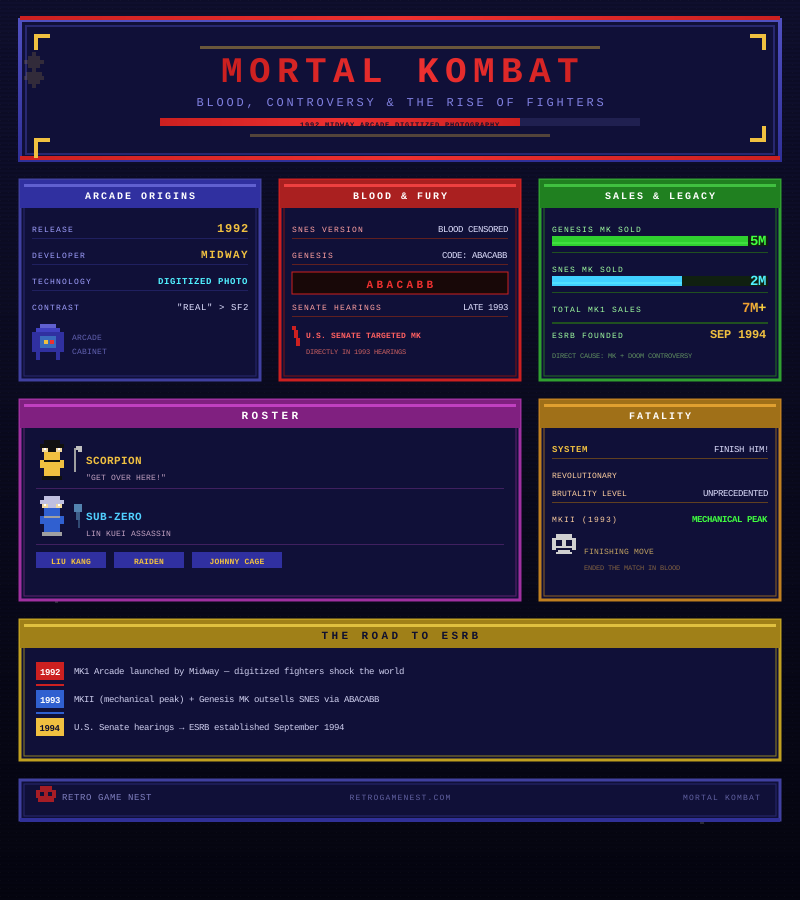 Mortal Kombat pixel art infographic — 1992 arcade, digitized graphics, ABACABB code, Senate hearings, and ESRB
Sources
- Hardcore Gaming 101 — Mortal Kombat: https://www.hardcoregaming101.net/mortal-kombat/
- ESRB History: https://www.esrb.org/about/history/
- Mortal Kombat Arcade Kollection — Steam: https://store.steampowered.com/app/203550/
- MobyGames — Mortal Kombat (1992): https://www.mobygames.com/game/7789/mortal-kombat/
FAQ
When was the original Mortal Kombat released? Arcades in October 1992. Home versions on Sega Genesis and SNES in September 1993.
Why did Mortal Kombat cause controversy? Photorealistic graphics combined with blood and dismemberment-based fatalities led to U.S. Senate hearings in 1993 and the creation of the ESRB in 1994.
What was the Genesis blood code? A, B, A, C, A, B, B on the title screen. This unlocked the full blood and unaltered fatalities.
Is MK1 or MK2 better? MK2 is the stronger game mechanically. MK1 is the historically significant one.
Frequently Asked Questions
- When was the original Mortal Kombat released?
- Mortal Kombat was released in arcades in October 1992 by Midway Games. Home versions for Sega Genesis and SNES followed in September 1993.
- Why did Mortal Kombat cause controversy?
- The game featured digitized photorealistic graphics combined with graphic violence including blood, decapitation, and fatality finishing moves. A U.S. Senate subcommittee held hearings in 1993 specifically about MK and Night Trap, leading directly to the creation of the ESRB rating system in 1994.
- What was the difference between the SNES and Genesis versions of Mortal Kombat?
- The Genesis version retained the blood and full fatalities. The SNES version replaced blood with gray sweat and altered or removed several fatalities. The Genesis version required a cheat code (A, B, A, C, A, B, B) to unlock the blood, which was on by default. The Genesis version sold significantly better as a result.
- Who created Mortal Kombat?
- Mortal Kombat was created by Ed Boon (game designer and programmer) and John Tobias (artist and co-writer) at Midway Games. The game used digitized sprites created from live actors, including actors Daniel Pesina (Johnny Cage/Scorpion/Sub-Zero) and Ho Sung Pak (Liu Kang/Shang Tsung).
- How can I play the original Mortal Kombat today?
- The Mortal Kombat Arcade Kollection (2012) is available on PC via Steam and includes MK1, MK2, and Ultimate Mortal Kombat 3 in arcade-accurate versions.