The Legend of Zelda Classic Series: A Nostalgic Retrospective
A game-by-game look at the classic Legend of Zelda titles — from the 1986 NES original through Majora's Mask. Includes a ranking table, what still holds up, and how to play each game legally today.
Quick Answer
The classic Zelda series — roughly 1986 to 2000 — produced six titles that defined action-adventure gaming. Start with A Link to the Past if you want the best single entry. Play Ocarina of Time if you want to understand why the series became legendary. All six are available legally on Nintendo Switch.
Last Updated
Reviewed May 2026. Nintendo Switch Online library availability verified at time of writing. Platform libraries change — check Nintendo’s official site for current titles.
Who This Is For
- Players who grew up with Zelda and want a structured way to revisit the classics
- Retro gamers new to the series wondering where to start
- Anyone curious about why these games still generate genuine nostalgia decades later
- Parents introducing classic games to younger players
Key Takeaways
- The original NES Zelda (1986) invented a genre — open-world action-adventure with puzzle-gated progression
- A Link to the Past (1991) is the definitive 2D Zelda and holds up almost perfectly today
- Ocarina of Time (1998) remains one of the most technically and creatively significant games ever made
- Majora’s Mask (2000) is the series’ most experimental and emotionally resonant title — often underrated
- All six classic-era Zelda games are legally available on Nintendo Switch in 2026
- The series earns its nostalgia — these games genuinely hold up, not just as memories but as designed experiences
Why Zelda Nostalgia Hits Differently
Most game series age — mechanics feel dated, graphics jar, controls fight you. The classic Zelda games resist this more than almost anything from the same era.
The reason is design philosophy. Miyamoto and Tezuka built the original Zelda around discovery and problem-solving, not reaction time or reflexes. That philosophy carries forward through every classic entry. You can play A Link to the Past today and the puzzles still require thought. The dungeons still reward careful observation. The world still rewards exploration.
What nostalgia amplifies, in this case, is real. These games were ambitious for their time and many of their design decisions have aged gracefully. The emotional response is built on a foundation of genuine quality — which is why Zelda nostalgia feels different from nostalgia for games that were merely popular.
The Classic Era: Game by Game
The Legend of Zelda (NES, 1986)
Nintendo’s first Zelda dropped players into Hyrule with no guidance, no map markers, and no indication of where to go. That was the point.
Shigeru Miyamoto designed the game around the experience of exploring fields near his childhood home — the curiosity of finding a cave, the excitement of discovering what was inside. The overworld of the original Zelda is still one of the most cohesive open worlds in gaming history, built from a 16x8 grid of screens that interconnect naturally.
What still holds up: The sense of discovery. The open structure. The density of secrets. Finding a hidden dungeon entrance in a burned patch of forest still feels earned.
What is harder to love now: The game provides almost no direction. Without a guide, new players may spend hours searching for the next dungeon. The final dungeons (7 through 9) have enemy gauntlets that feel more punishing than clever.
Verdict: Essential for its historical significance. Challenging but rewarding on its own terms.
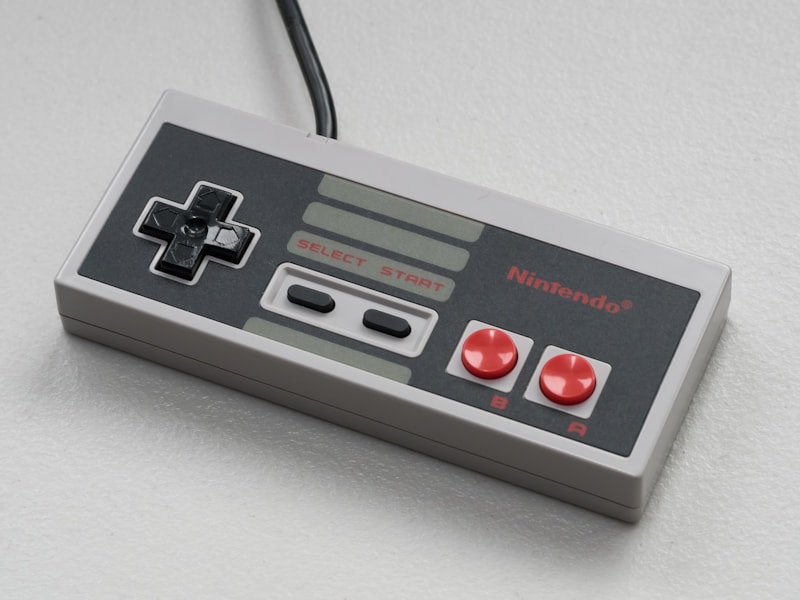 The NES controller — the input device that introduced millions of players to Hyrule. Photo: William Warby / Unsplash (Unsplash License)
Zelda II: The Adventure of Link (NES, 1987)
The most controversial entry in the series. Zelda II abandoned the top-down perspective entirely, replacing it with a sidescrolling action RPG with experience points, level-ups, and palace dungeons that play out as 2D side-scrollers.
It is a competent game judged on its own merits. The combat is precise and the palace designs are inventive. But it sits so far outside the series’ identity that it has always been the odd one out.
What still holds up: The combat system has more depth than people remember. The magic system is inventive.
What is harder to love now: The difficulty spike in the later palaces is extreme. The overworld random encounters become tedious. The game rewards grinding in a way that feels at odds with the rest of the series.
Verdict: Worth playing once out of curiosity. Not the place to start.
A Link to the Past (SNES, 1991)
If you have time for one classic Zelda, it is A Link to the Past.
The game refined everything the NES original established and added the dual-world mechanic — a Light World Hyrule and a dark mirror Dark World — that doubled the effective size of the game while creating puzzle opportunities that neither world could provide alone. The dungeon design reaches a peak here that few action-adventure games from any era have matched.
A Link to the Past also introduced the Master Sword, the Triforce mythology in its modern form, and the visual language that defined the series for a decade.
What still holds up: Almost everything. The controls are crisp. The dungeons are masterfully structured. The dual-world mechanic generates genuine surprise even on repeat playthroughs. The music is among the best ever composed for a video game.
What is harder to love now: Very little. The game is complete. Players who want handholding may find it slightly opaque in a few dungeon puzzles, but nothing approaches the obscurity of the NES original.
Verdict: The definitive entry. Start here.
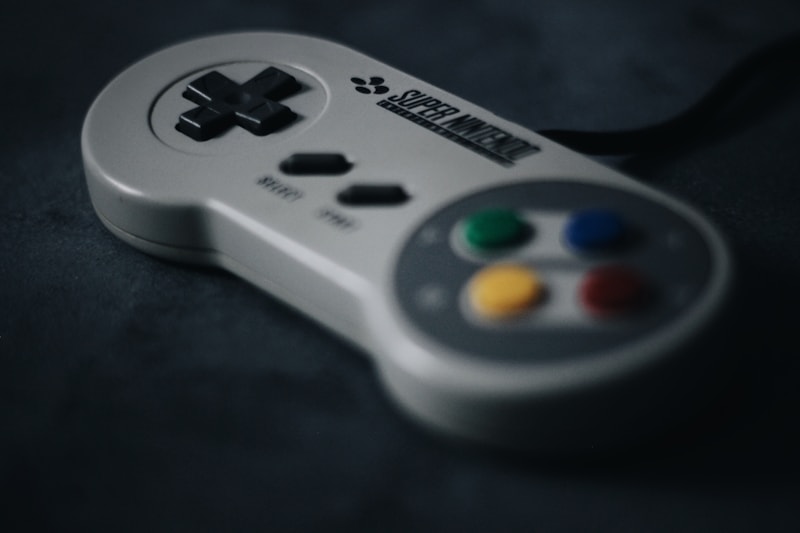 The Super Nintendo controller — A Link to the Past was designed around these four face buttons, the shoulder buttons, and a D-pad capable of diagonal movement. Photo: Kamil Switalski / Unsplash (Unsplash License)
Link’s Awakening (Game Boy, 1993)
Developed as an unofficial side project by a small team at Nintendo, Link’s Awakening tells a self-contained story with no Ganon, no Triforce, and a strangely melancholic ending that the main series would not attempt again until Majora’s Mask.
The game runs on a compressed version of the A Link to the Past engine adapted for Game Boy hardware. Its limitations force clever design decisions — small dungeons that feel complete, an overworld packed with memorable characters, and a tone that is warmer and stranger than the main series.
What still holds up: The writing, the atmosphere, the dungeons. The 2019 Nintendo Switch remake updates the visuals beautifully while preserving the original design almost entirely.
What is harder to love now: The original Game Boy version has aged technically — low resolution, minor slowdown. The Switch remake resolves this.
Verdict: A hidden gem in the series. The Switch remake is the recommended version today.
Ocarina of Time (Nintendo 64, 1998)
Ocarina of Time carried the weight of an impossible expectation — translating the Zelda formula into 3D at a time when 3D game design was still finding its foundations — and delivered something that exceeded the expectation entirely.
The game introduced Z-targeting, a lock-on combat system that became standard across action-adventure games for the next decade. It introduced context-sensitive controls, where the same button performed different actions based on circumstances. It built a Hyrule that felt like a real place — a coherent world with geography, history, and a population that changed as the story progressed.
The time-travel structure — child Link and adult Link separated by seven years — created a narrative and mechanical contrast that gave the world depth. Dungeons you visit as a child are revisited as an adult, transformed, with implications for what happened in between.
What still holds up: The world design. The dungeon structure. The sense of scale. The Water Temple, despite its notorious reputation, is a masterpiece of spatial reasoning.
What is harder to love now: Camera control is limited by N64 standards. Some early dungeon tutorials are slower than modern players expect. The Water Temple’s item management is genuinely frustrating without the quality-of-life fix in the 3DS remaster.
Verdict: One of the best games ever made. The 3DS remaster (Ocarina of Time 3D) is the best version. The Nintendo Switch N64 library version is the most accessible.
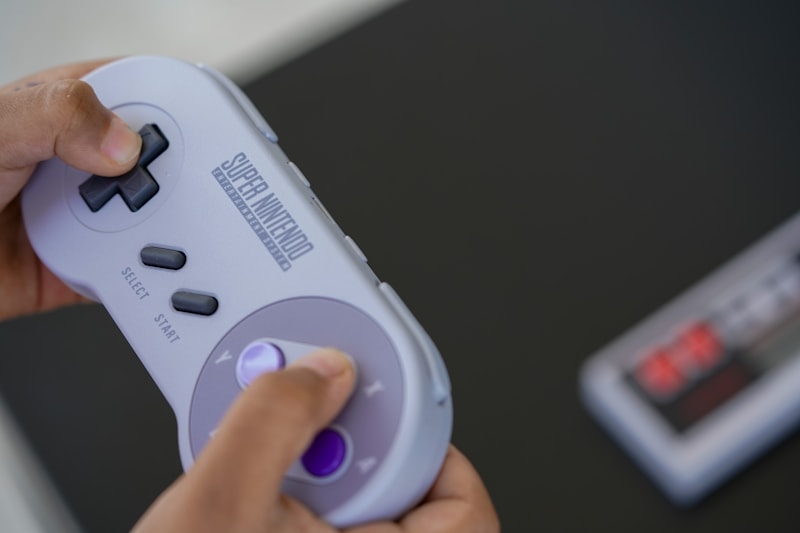 Classic Nintendo hardware from the same era that defined Ocarina of Time’s design DNA. The SNES-to-N64 transition preserved the same creative team and gameplay philosophy. Photo: Ravi Palwe / Unsplash (Unsplash License)
Majora’s Mask (Nintendo 64, 2000)
Built in approximately 18 months using the Ocarina of Time engine, Majora’s Mask is arguably the most ambitious game Nintendo has ever made within a constrained timeframe.
The game replaces Hyrule with Termina — a parallel world facing apocalyptic destruction in 72 hours. A moon is falling. A clock is ticking. And Link must relive the same three days repeatedly, gaining knowledge and items with each loop to ultimately stop the catastrophe.
The mechanic forces a different kind of attention. Side characters have full 72-hour schedules. Helping them requires understanding their routines. The main dungeons are fewer than in Ocarina of Time but each is more elaborate. The game’s emotional undertone is darker than anything Nintendo produced before or since — grief, acceptance, and the weight of time run through almost every quest.
What still holds up: Everything about the design ambition. The Anju and Kafei sidequest is one of the finest pieces of video game storytelling from the N64 era. The mask system provides more character variety than the entire rest of the classic series combined.
What is harder to love now: The time cycle creates pressure that some players find stressful rather than engaging. The 3DS remaster addresses some pacing issues. The original N64 version requires saving at owl statues carefully to avoid losing progress.
Verdict: The most underrated classic Zelda. Play it after Ocarina of Time.
Classic Zelda Ranking Table
| Game | Year | Platform | Holds Up? | Best For | Where to Play |
|---|---|---|---|---|---|
| A Link to the Past | 1991 | SNES | ✅ Excellently | Everyone | Switch Online (SNES) |
| Ocarina of Time | 1998 | N64 | ✅ With caveats | Series fans | Switch Online (N64) |
| Majora’s Mask | 2000 | N64 | ✅ Excellently | Experienced players | Switch Online (N64) |
| Link’s Awakening | 1993 | Game Boy | ✅ (use remake) | Handheld fans | Switch (2019 remake) |
| The Legend of Zelda | 1986 | NES | ⚠️ With a guide | History seekers | Switch Online (NES) |
| Zelda II | 1987 | NES | ⚠️ For curiosity | Series completionists | Switch Online (NES) |
What Holds Up — And What Doesn’t
Ages Well
- Dungeon design — puzzle logic from the SNES and N64 era remains satisfying and non-trivial
- Music — Koji Kondo’s compositions for the series are among the most recognizable in gaming; they hold up completely
- World design — Hyrule across all six games feels coherent and purposeful, not arbitrary
- Exploration reward — secrets feel earned rather than procedurally generated
Ages Less Well
- NES-era opacity — the original Zelda and Zelda II provide minimal direction; modern players will benefit from a FAQ or guide
- N64 camera — Ocarina of Time and Majora’s Mask have camera limitations that the 3DS remasters resolve
- Save system (Majora’s Mask N64) — the original version’s save mechanic requires care; the 3DS version is more forgiving
How to Play Today — Legal Options
Nintendo Switch Online
Nintendo Switch Online includes:
- NES library: The Legend of Zelda, Zelda II: The Adventure of Link
- SNES library: A Link to the Past
- N64 library (Expansion Pack required): Ocarina of Time, Majora’s Mask
The N64 library requires the higher-tier Nintendo Switch Online + Expansion Pack subscription.
Nintendo eShop / Physical
- Link’s Awakening (2019 remake) — available as a standalone purchase on Nintendo Switch; recommended over the original Game Boy version
- Ocarina of Time 3D and Majora’s Mask 3D — available on Nintendo 3DS eShop
Physical Cartridges
Original cartridges for NES, SNES, and N64 Zelda titles remain available on the used market. Prices have increased substantially for complete-in-box copies. Verify cartridge authenticity — reproductions are common, especially for the NES titles.
Which Game Should You Start With?
Use this guide based on your situation:
| Your situation | Start with |
|---|---|
| You want the best single Zelda experience | A Link to the Past |
| You want to understand 3D Zelda | Ocarina of Time |
| You have a Nintendo Switch Online subscription | A Link to the Past (SNES library) |
| You want something shorter and portable | Link’s Awakening (Switch remake) |
| You want to go in release order | The Legend of Zelda (NES) — with a guide |
| You finished Ocarina and want more | Majora’s Mask |
| You are a series completionist | Zelda II (after everything else) |
Editor’s Note
The Zelda series earns its nostalgic reputation because the design holds up, not just the memories. A Link to the Past can be handed to someone who has never played it and they will be engaged by the puzzle logic within an hour. Ocarina of Time still teaches 3D spatial reasoning better than most modern games.
What the classic era got right was restraint combined with ambition — ambitious enough to invent new things, restrained enough to make each element serve the experience. That combination is rarer than it sounds, which is why revisiting these games feels like a reunion with something genuinely well-made.
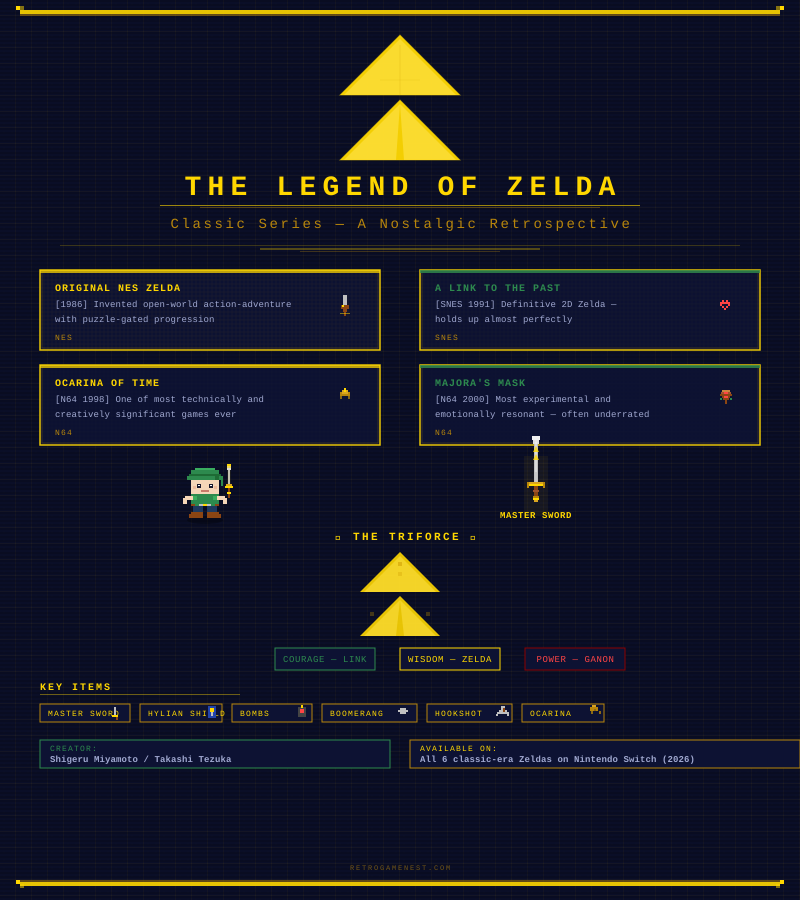 Legend of Zelda pixel art infographic — 1986 NES original, A Link to the Past, Ocarina of Time, and classic series retrospective
Sources
- Nintendo — The Legend of Zelda official history: https://www.zelda.com/history/
- Hardcore Gaming 101 — Zelda series: https://www.hardcoregaming101.net/zelda/
- MobyGames — The Legend of Zelda (NES): https://www.mobygames.com/game/1735/the-legend-of-zelda/
- Nintendo Switch Online game library: https://www.nintendo.com/en-US/switch/online/
FAQ
Frequently Asked Questions
- Which classic Zelda game should I play first?
- A Link to the Past (SNES, 1991) is the best entry point. It has aged beautifully, plays intuitively on modern hardware, and captures everything the series stands for. If you want to go chronologically, start with the original NES game — but expect a sharper learning curve.
- Is the original Legend of Zelda (NES) still worth playing?
- Yes, with caveats. The NES original is a genuine landmark and its open-world structure is impressive for 1986. However, it provides almost no guidance — modern players should either use a guide or embrace the trial-and-error exploration as part of the experience.
- Why is Ocarina of Time considered the greatest game ever?
- Ocarina of Time (1998) was the first game to successfully translate the Zelda formula into 3D. It introduced Z-targeting for combat, context-sensitive controls, and a scale of world-building that had no equal on the N64. It was technically and creatively ahead of everything around it.
- Is Zelda II: The Adventure of Link a good game?
- It is the most divisive Zelda title. As a sidescrolling action RPG it is competent, but it bears almost no resemblance to the rest of the series. Most players skip it on first playthroughs and return out of curiosity. It is worth experiencing once.
- Where can I play classic Zelda games legally today?
- Nintendo Switch Online includes the NES and SNES libraries, covering the original Zelda, Zelda II, A Link to the Past, and Link's Awakening DX. Ocarina of Time and Majora's Mask are available on Nintendo Switch via the Nintendo 64 Expansion Pack library.