Pac-Man: How a Simple Maze Became a Global Icon
The complete history of Pac-Man — from Toru Iwatani's 1980 design brief to billion-dollar franchise. Ghost AI explained, cultural impact analyzed, and every way to play the original arcade game today.
Pac-Man: How a Simple Maze Became a Global Icon
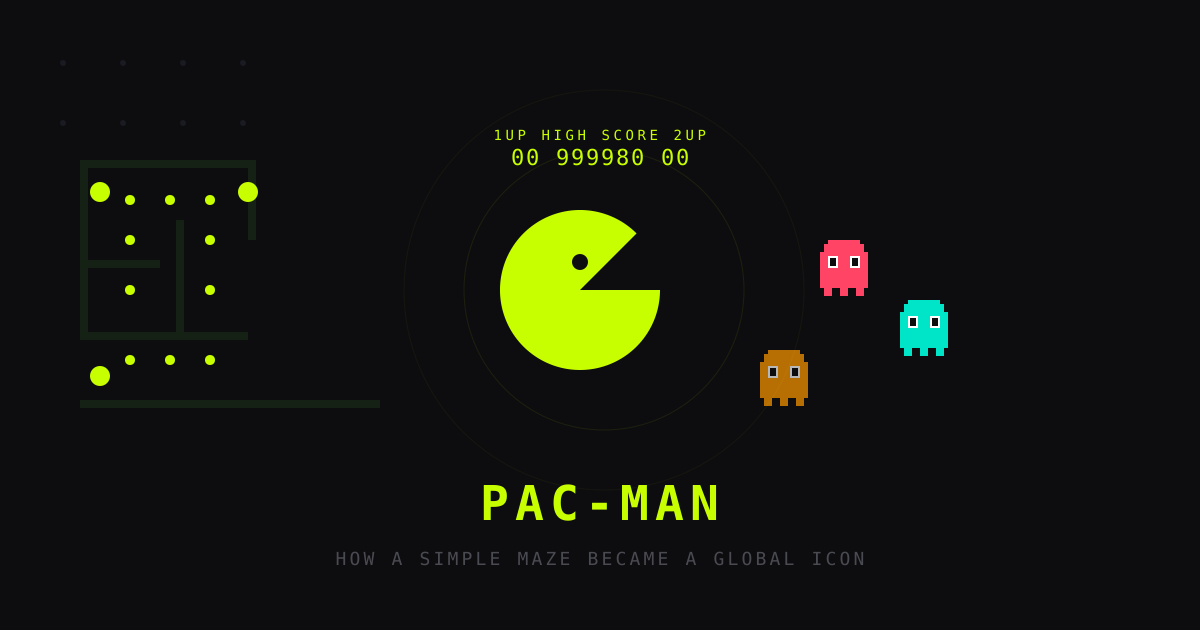
 Pac-Man pixel art infographic — 1980 release, ghost AI types, cabinet sales, and cultural impact
In May 1980, a yellow circle with a wedge cut out of it appeared on arcade screens in Japan. Nobody expected it to become one of the most recognized images in the history of human culture. The game was called Puck-Man in Japan, renamed Pac-Man for international release, and it changed what arcades were, who played them, and what games could be.
This is the full story — the design decisions that made it work, the ghost AI that gives it depth, the cultural explosion that followed, and where to play it today.
The Design Brief: A Game for Everyone
In 1978, Space Invaders had launched the golden age of arcade gaming. By 1979, Namco designer Toru Iwatani was watching the arcade floors fill almost exclusively with young men shooting at things.
Iwatani had a different idea. His design brief was not a game concept but a demographic question: what game would bring women and couples into arcades?
His answer was built around two principles. First, no violence — no shooting, no killing, no destruction. Second, a concept simple enough to understand within seconds.
The maze idea emerged from an observation about how people eat. Iwatani reportedly looked at a pizza with a slice removed and saw a face. The mechanic followed: a character that moves through a maze eating dots, chased by monsters it can temporarily turn on.
The maze itself was designed to be learnable without being memorized. You can play Pac-Man instinctively. Every corner, every decision, every reversal of fortune reads immediately.
What the design got right: The simplicity is deceptive. The maze has 240 dots, 4 power pellets, and 6 fruit bonuses per level. The spacing of the maze corridors creates natural choke points and escape routes that players discover through play, not instruction.
The Ghost AI: Four Personalities in 4KB
The four ghosts — Blinky (red), Pinky (pink), Inky (cyan), and Clyde (orange) — are the mechanical heart of Pac-Man. Their behavior is simple in description and surprisingly sophisticated in effect.
Each ghost operates on two alternating modes: scatter and chase. In scatter mode, each ghost targets a fixed corner of the maze and circles it. This creates the brief window at game start where the ghosts are predictable and manageable. In chase mode, each ghost activates its individual targeting behavior.
-
Blinky targets Pac-Man’s current tile directly. He is the relentless pursuer. As the dot count drops, Blinky enters an unofficial mode players call “Cruise Elroy” — he speeds up, making him increasingly dangerous as levels progress.
-
Pinky targets the tile four squares ahead of Pac-Man’s current direction. Her purpose is to cut off escape routes and ambush from the front.
-
Inky is the most complex. His target is calculated using both Blinky’s position and Pac-Man’s position, creating an intercept vector that makes him unpredictable in the middle of a chase.
-
Clyde chases directly when far from Pac-Man, but retreats to his scatter corner when within eight tiles. He appears erratic but follows a consistent logic.
The result is that a player being chased by all four ghosts simultaneously faces something that feels like coordinated intelligence — two approaching from ahead, one from behind, one cutting off the nearest turn. This emergent behavior from four simple rules is one of the most elegant systems in arcade game design.
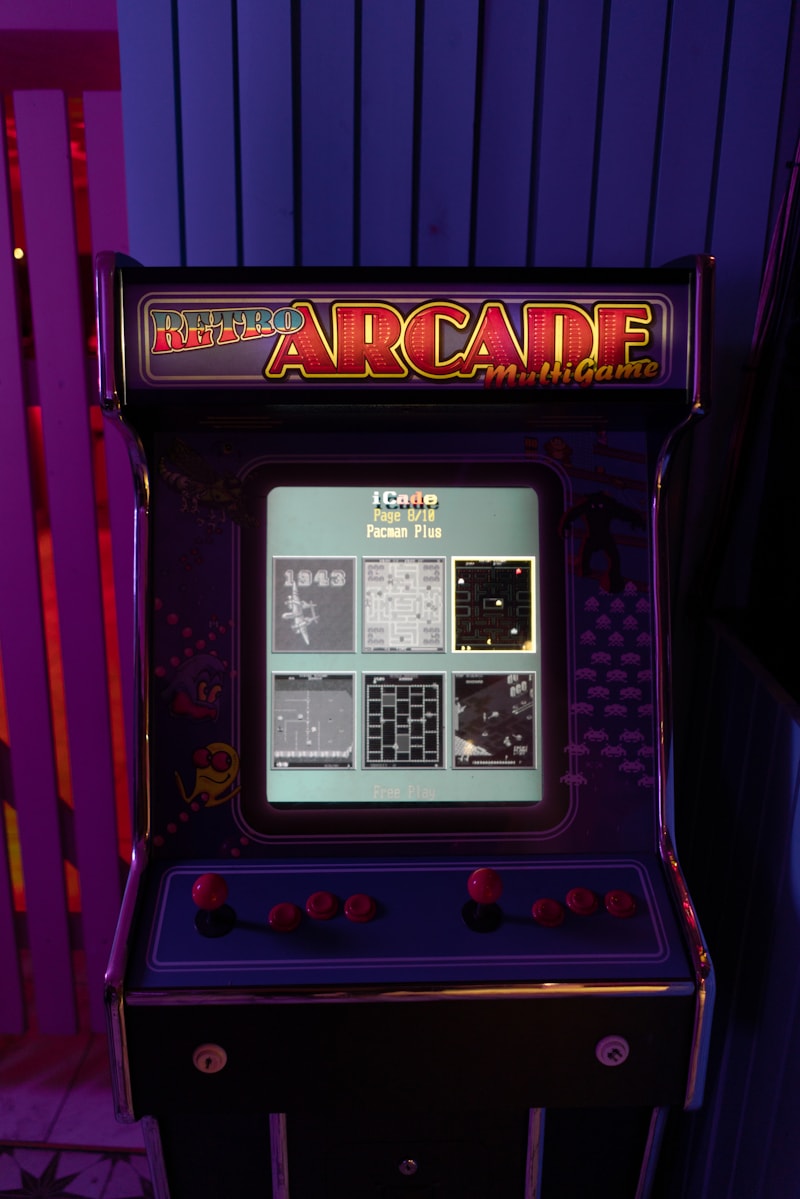 The arcade cabinet in its natural habitat — a staple of entertainment venues worldwide from the early 1980s through the decade. Photo: Benjamin Szabo / Unsplash (Unsplash License)
Pac-Man Fever: The Cultural Explosion
Pac-Man arrived in North American arcades in October 1980. By 1981 it was the highest-grossing arcade game in history, generating more revenue than Star Wars had in its theatrical run. By 1982, Pac-Man had become something beyond a game.
In 1982, songwriters Jerry Buckner and Gary Garcia released “Pac-Man Fever,” a novelty song about the arcade craze. It reached number 9 on the Billboard Hot 100. It sold over a million copies.
CBS aired an animated Pac-Man cartoon series that ran from 1982 to 1983. Pac-Man merchandise — lunchboxes, bedsheets, board games, clothing, breakfast cereal — generated over $1 billion in sales during 1982 alone.
Time magazine ran a cover story on the game. Mad magazine parodied it. Psychologists studied the “Pac-Man phenomenon” — the combination of simple rules, escalating difficulty, and near-miss reward timing that made it nearly impossible to stop playing.
The cultural moment was significant beyond the numbers. Pac-Man was the first video game character with a face, a personality, and merchandise appeal. It demonstrated that video games could produce not just products but icons.
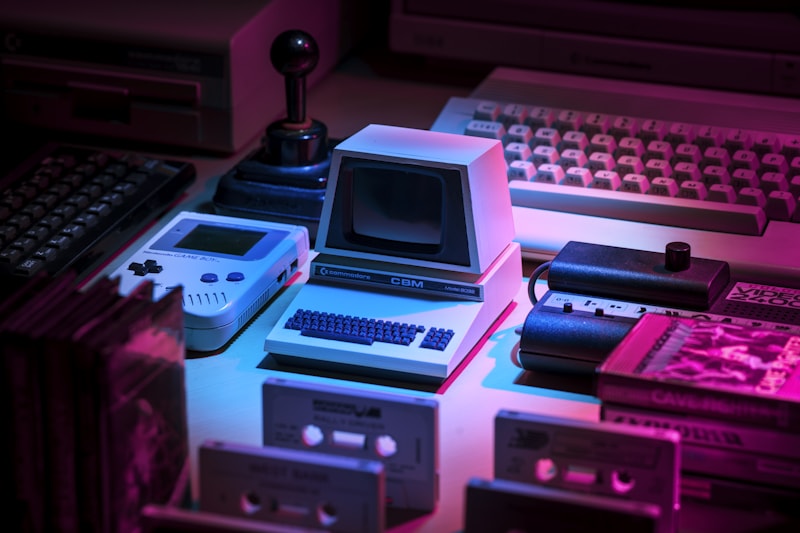 The joystick was Pac-Man’s natural interface — players developed muscle memory for the four-direction control, making the physical feel of the game inseparable from the experience. Photo: Lorenzo Herrera / Unsplash (Unsplash License)
The Home Port Problem: Atari 2600 and Beyond
In 1982, Atari paid $21 million for the rights to port Pac-Man to the Atari 2600. The result became one of the most infamous software releases in gaming history.
The Atari 2600 hardware could not display four sprites simultaneously without flickering, and the maze structure was drastically simplified. The dots became dashes. The ghosts flickered. The maze bore only a passing resemblance to the original. Atari manufactured 12 million cartridges in anticipation of massive demand and sold approximately 7 million. The remaining inventory became symbolic of the expectations the industry had set for itself.
The lesson was absorbed differently by different companies. Nintendo’s later NES port (1984 in Japan, 1990 in North America) was significantly more faithful to the original. The NES hardware handled the maze proportions better and the ghost behavior more accurately, though it still lacked the original arcade’s visual clarity.
The true arcade-accurate home experience would not arrive until later — on the PC Engine/TurboGrafx-16 (1990) and eventually on the PlayStation through various Namco compilations — when hardware had caught up to the original machine.
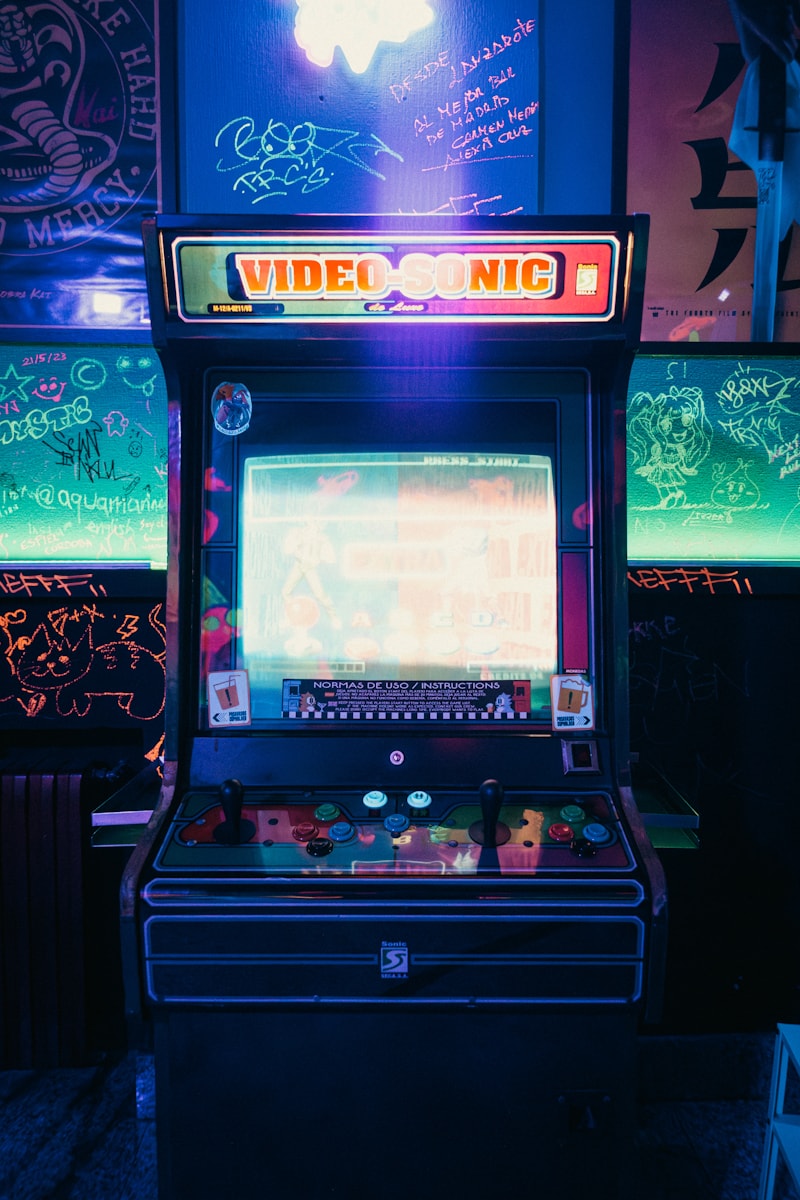 The arcade environment was as much a part of Pac-Man’s appeal as the game itself — the dark cabinets, the glowing screens, the ambient noise of a dozen games running simultaneously. Photo: Brunno Tozzo / Unsplash (Unsplash License)
The Perfect Score: 3,333,360 Points
The original Pac-Man has 255 levels. Level 256 triggers a hardware overflow — the right half of the screen corrupts into a cascade of random characters. The playable portion of the maze is still accessible, but the kill screen effectively ends the run.
A perfect game requires clearing all 255 levels, eating every dot (240 per board), every power pellet (4 per board), eating all four ghosts during every power pellet window, and collecting every fruit (two per board after level 1). The theoretical maximum: 3,333,360 points.
Billy Mitchell achieved this in July 1999 at Funspot Family Entertainment Center in New Hampshire, a six-hour run that required not a single mistake across 255 boards. His record stood as the reference mark for decades, though competitive Pac-Man grew a dedicated community around it.
The perfect score represents something unusual in gaming — not a designed endpoint but an emergent ceiling discovered through obsessive mastery of a system its designers never expected players to fully understand.
Ms. Pac-Man: The Sequel That Outperformed the Original
In 1981, a modified Pac-Man board kit began circulating in American arcades. Crazy Otto was an unauthorized hack by MIT students at a company called General Computer Corporation that added a bow, lipstick, and a new set of mazes to the base game.
Rather than litigate, Midway licensed the modifications and released them as Ms. Pac-Man in January 1982. By most measures, it is a better game than the original. The mazes are less predictable. The ghost movement has a randomized element that eliminates perfect memorization strategies. The fruit bounces unpredictably across the maze rather than sitting in a fixed spot.
Ms. Pac-Man became the best-selling arcade game in North American history, outselling the original Pac-Man in the US market. Toru Iwatani has expressed mild ambivalence about a sequel created without his direct involvement becoming the more beloved version.
How to Play Pac-Man Today
The original arcade Pac-Man is available through several legal routes:
- Pac-Man Museum+ (PC/Switch/PS4/Xbox) — collects 14 Pac-Man titles including the arcade original with accuracy options
- Namco Museum collections — various compilations available on modern platforms, accuracy varies by version
- Antstream Arcade (streaming) — legal arcade emulation including early Namco titles
- Arcade1Up cabinets — licensed home arcade hardware with accurate emulation
For the most authentic experience, the Pac-Man Museum+ arcade mode on PC running through original ROM emulation provides the closest approximation to the 1980 machine.
Verdict
The original Pac-Man (1980, Namco): Holds up completely as a mechanical exercise. The ghost AI creates genuine tension even when you understand it. The scoring system rewards aggression. The maze layout is as close to perfect as a single screen can be.
Ms. Pac-Man (1982): Mechanically superior in almost every way. The randomized elements extend replayability indefinitely. Play this if you want a game to return to over time.
The legacy: Pac-Man demonstrated that video games could be culture — not just products consumed by a demographic niche but shared experiences that crossed age, gender, and background. Every design conversation about accessibility, about non-violent appeal, about character identity in games runs through this maze.
Frequently Asked Questions
- Who created Pac-Man?
- Pac-Man was designed by Toru Iwatani at Namco and released in Japanese arcades in May 1980. The character concept was inspired by a pizza with a slice removed.
- What are the Pac-Man ghost names and behaviors?
- The four ghosts are Blinky (red, direct chase), Pinky (pink, targets ahead of Pac-Man), Inky (cyan, calculated intercept), and Clyde (orange, approaches then retreats). Each has a distinct AI pattern.
- What is the Pac-Man perfect score?
- The maximum possible score in the original Pac-Man is 3,333,360 points. Billy Mitchell was the first to achieve it in 1999, a feat that requires clearing all 255 screens and eating every dot, fruit, and ghost possible.
- Where can I play the original Pac-Man today?
- Pac-Man Museum+ (PC, consoles) collects 14 Pac-Man games including the arcade original. The game is also available on Antstream Arcade, various Namco collections, and through legal browser emulation on some platforms.